

Arrival Guide 

Location

About the mountain

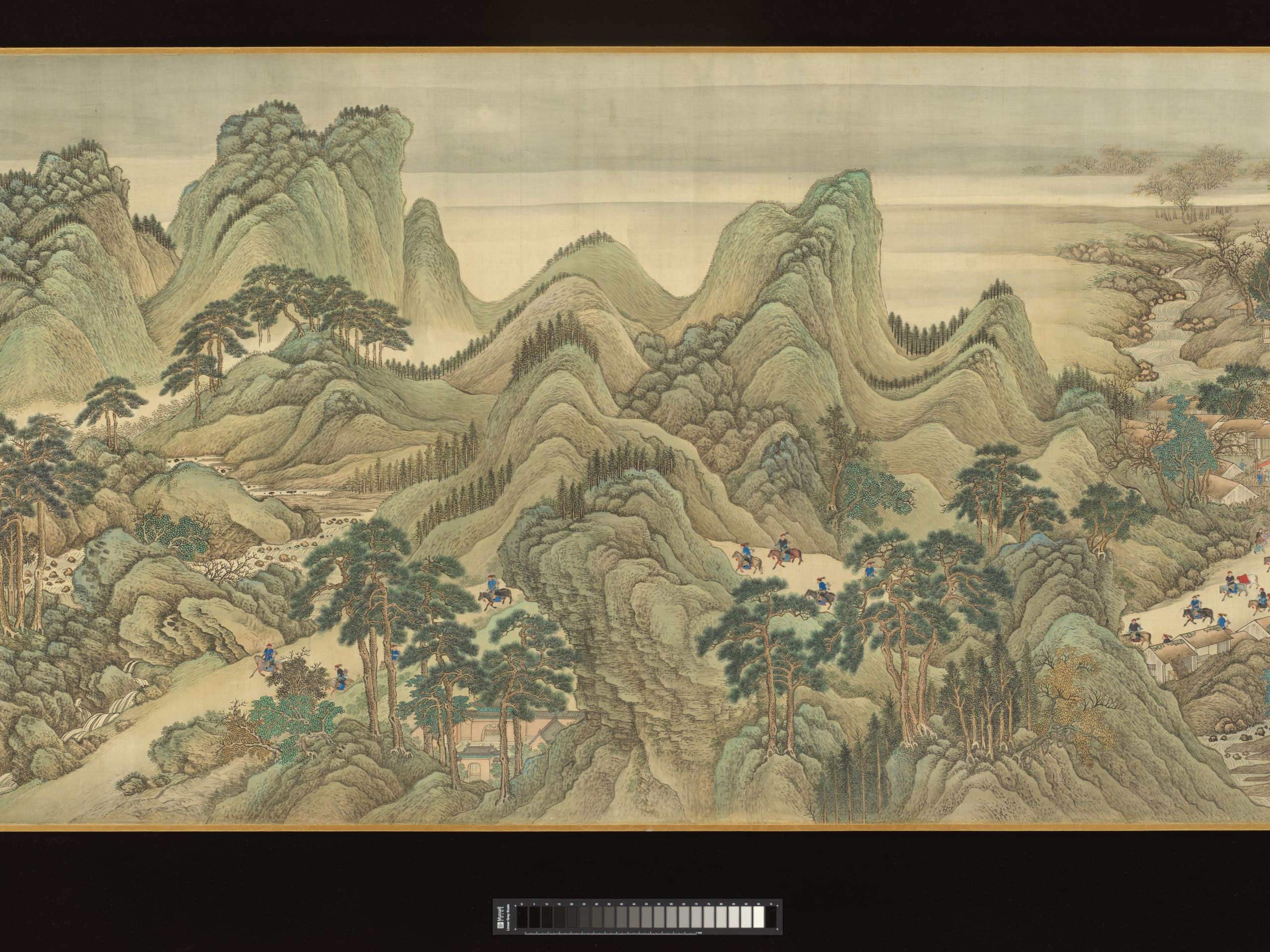
Sixteen million years ago, when the volcano Palo Huérfano was still active, it helped carve the river systems that gave form to the land — an ancient mother to the valleys and plains of the Bajío. It rose from the same volcanic forces that shaped much of central Mexico, part of the great Trans-Mexican Volcanic Belt. Today, its weathered slopes descend through grassland, semi-desert, oak woodland and volcanic forest, making the mountain a natural corridor for wildlife.

For millennia, this has been a landscape of passage. Mammoths and saber-toothed cats once crossed these slopes; their fossils still surface in the surrounding rock. Today, the mountain remains alive in the same rhythm: red-tailed hawks turning in the thermals, mountain lions moving across the higher ground, and each autumn, monarch butterflies passing south on one of the greatest migrations on Earth. On the western slopes, in caves reached only on a four-hour horseback journey from the house, petroglyphs carved centuries ago by ancient Mesoamericans still mark the stone.

On a clear night, you can see the planets and the pale river of the Milky Way with the naked eye. These skies have long captivated human thought, as we have gazed at them in search of our place in the order of things. Evidence of this lies nearby: the ceremonial centres of the Hñähñu (Otomí) were deliberately oriented toward the movements of the sun, moon and Venus. For the Hñähñu, these mountains belonged to the same world as the stars: ancient, enduring and alive with meaning.

Yet what guests notice first is the silence: a stillness broken only by wind and birdsong. Then, after dark, the stars emerge beneath a sky so dark that they feel impossibly close.

San Miguel de Allende

San Miguel de Allende sits in the highlands of central Mexico, where the dry landscape gives way to ochre walls, pink stone and quiet courtyards. Founded in the 16th century, the city grew alongside the roads connecting Mexico City with the silver mines of the north, its architecture shaped by centuries of Indigenous and Spanish influence.

In the 20th century, artists and great thinkers like Frida Kahlo, Pablo Neruda and Jack Kerouac began to gather in San Miguel. And its reputation as a refuge for the unconventional has endured till today. Behind its celebrated facades, San Miguel remains a city made for wandering — through markets and galleries, shaded courtyards and quiet streets, where the old and the new continue to meet.

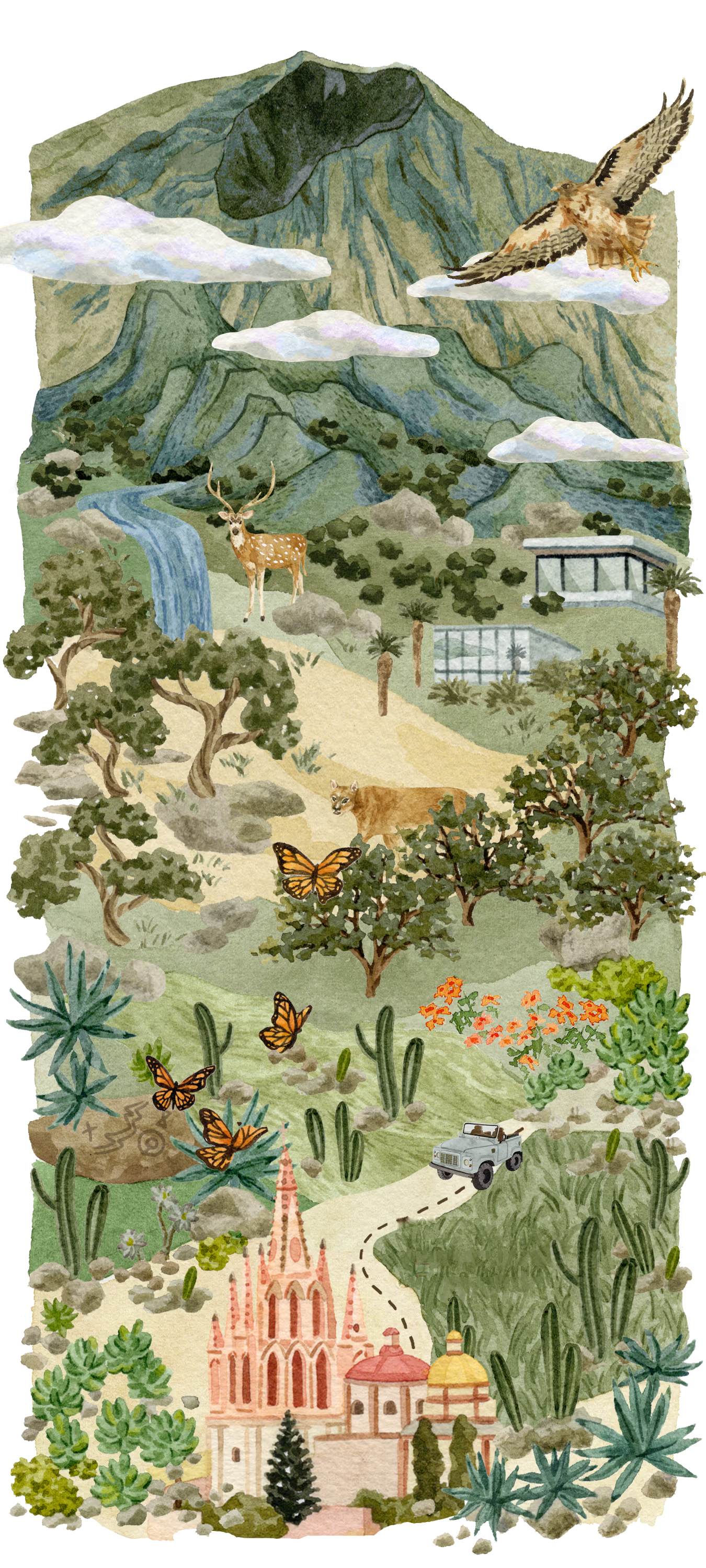
A painted map of the way down from the volcano Palo Huérfano, 2600 m, to San Miguel de Allende: a hawk over the crater and clouds, a waterfall and a deer, the two mirrored houses, Etérea N°2 and N°1, among oaks, a mountain lion, monarch butterflies and orange flowers, agaves and cacti by a carved rock, a jeep on the dashed track marked San Miguel, a twenty-minute drive, and the pink Parroquia at the foot.

Safety & accessibility

San Miguel de Allende is considered one of Mexico’s safest cities, and Casa Etérea is in a quiet, closely connected community. Selene, our house manager, lives ten minutes away with a view toward both houses, while many of our neighbours, who we employ for various services, are part of the property’s daily life. The houses lock securely from within, and the grounds are monitored. A hospital and pharmacy are approximately ten minutes away by car.

The mountain is private and secluded, but never remote. Guests travelling alone, including women travelling solo, are welcome and well cared for here, as are guests of all orientations.

Best time to visit, weather & altitude

San Miguel is truly a year-round destination. In 2023, it officially became the sister city of Palm Springs, uniting two desert jewels known for their mountain horizons, architecture and artists. At 1,900 metres, the high-desert climate brings warm days, cool nights and remarkable clarity, and the mountain moves through two distinct moods, each with its own beauty. From June to August, light summer showers turn the hills green, wildflowers appear, and the landscape takes on an iridescence that lasts well into autumn. From December to March, the valleys turn golden and crystalline skies reveal some of the most intense sunsets of the year.

Arrival Guide 

Tonight on the mountain

On clear nights, the Milky Way crosses the mountain. Far from the lights of town, the night is part of the stay.